Quick Summary
Most reputable junk removal crews carry general liability, workers' compensation and commercial auto insurance, but coverage varies by company. Customers in Jacksonville should request a certificate of insurance before booking and check the named insured, policy dates and coverage limits.
- General liability insurance pays for property damage or third-party injuries caused by the crew's work.
- Workers' compensation covers crew members hurt on the job, so homeowners are not left with those medical costs.
- Commercial auto insurance is needed because personal auto policies usually do not cover business trucks.
- Request a certificate of insurance for the specific job and confirm the named insured matches your hiring company.
- Check the policy period and coverage limits, since a certificate is evidence of coverage, not a guarantee of payment.
Table of Contents
- Why Insurance Matters When a Crew Enters Your Home
- The Main Types of Coverage a Junk Removal Company Should Carry
- Property Damage During Junk Removal: Who Pays and When
- Insured Crews vs. Uninsured Haulers: Pros and Cons
- How to Verify a Crew's Insurance Before a House Cleanout
- Booking Your Jacksonville Cleanout With EZ JUNKS
- Frequently Asked Questions
Are Junk Removal Crews Insured? What Jacksonville Customers Should Check
Last Updated: November 16, 2026
Why Insurance Matters When a Crew Enters Your Home
When a junk removal crews walks into your garage, attic or spare bedroom, they are working around your belongings, your floors and your walls. Accidents happen in those spaces: a sofa clips a doorframe, a crew member slips on a wet driveway, a box truck backs into a fence. Whether the company covers that damage, and whether it covers the person who got hurt, depends almost entirely on its insurance.
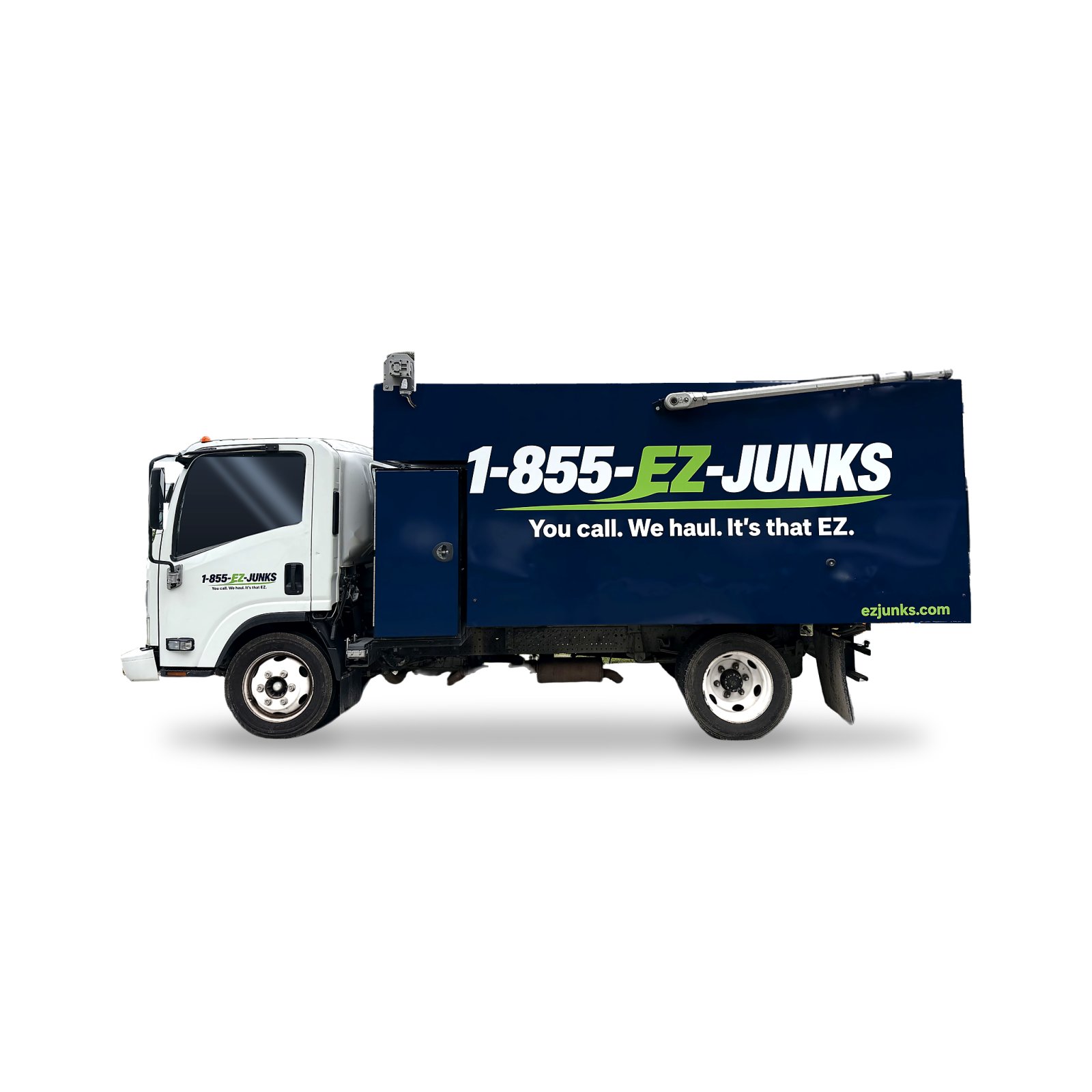
Customers in Jacksonville and across Northeast Florida should ask about insurance before any work starts, not after something goes wrong. The question is simple, but the answer has several parts. A company can carry one policy and still leave gaps elsewhere, so it helps to know what each type of coverage does.
The Main Types of Coverage a Junk Removal Company Should Carry
Insurance for a hauling business is not one product. Several policies cover different risks, and a well-run company typically carries more than one. Here are the core coverages you should look for, what each one actually responds to, and where the gaps tend to appear.
General liability insurance
General liability insurance pays when a crew member's work causes damage to someone else's property or injures a third party. If a worker knocks over a television during a cleanout, or a customer trips over a bag left in a hallway, this policy is what responds. It is the coverage most people mean when they ask whether a junk removal crew is "insured."
General liability policies carry a per-occurrence limit and an aggregate limit. The per-occurrence limit is the most the policy pays for one claim; the aggregate is the most it pays across all claims in a policy period. A certificate of insurance shows both. Ask for the numbers, not just the policy name, because a low per-occurrence limit can be used up by a single injury claim.
General liability also has exclusions. Common ones include damage to property the insured is working on (sometimes called your care, custody, or control), employee injuries (which belong to workers' compensation), and intentional acts. That is why the other coverages below matter.
Workers' compensation for crew members
Workers' compensation covers employees who get hurt on the job (Workers' Compensation). Lifting heavy mattresses, climbing stairs with refrigerators and working in tight attics all carry real injury risk. Without workers' compensation, an injured crew member may try to recover medical costs from the homeowner, and that claim can land on your doorstep.
Workers' compensation requirements depend on the employer and the type of work. Because the rules are specific and can change, ask the company directly whether its crew members are employees covered by a workers' compensation policy or independent contractors. The answer changes who is responsible if someone is hurt. A company that uses independent contractors should be able to explain how those workers are covered.
Commercial auto insurance for work vehicles
Junk removal trucks carry heavy loads through residential neighborhoods every day. Personal auto policies usually do not cover vehicles used for business, so a hauling company needs commercial auto insurance on its trucks (Business Vehicle Insurance). This policy covers collisions, injuries to other drivers and damage to other vehicles while the truck is on the job.
Commercial auto policies have limits and exclusions too. Ask whether the policy covers the specific trucks the crew uses, whether hired or borrowed vehicles are included, and whether the policy extends to trailers or equipment. If a company's truck is uninsured or underinsured and it is involved in an accident at your property, the claim can become messy.
Additional coverage worth asking about
Beyond the three core policies, some junk removal companies carry inland marine or tools-and-equipment coverage for expensive equipment, and some carry pollution or environmental liability for spills or improper disposal. These are not universal, but they show a company has thought about the specific risks of hauling bulky items, handling appliances, and transporting loads in the Jacksonville area. Ask what else the company carries and why.
What insurance does not cover
Insurance is not a warranty against every problem. Read the rental property cleanout workflow and timeline if you are a landlord planning a unit turnover. Policies commonly exclude damage from improper disposal, intentional damage, and wear and tear. They may also exclude damage to items the customer failed to disclose or secure. Understanding these exclusions helps you set expectations before the crew arrives and document the condition of your property.
Property Damage During Junk Removal: Who Pays and When
Property damage is the most common concern customers raise. When a crew damages a wall, a light fixture or a hardwood floor, who pays depends on the company's general liability coverage and how the damage happened.
A company with active liability insurance should cover damage caused by its crew's negligence. The claim usually goes through the company's insurer, not out of your pocket. That process still takes time, though, so document your property before the crew arrives. Take photos of floors, walls, doorways and any valuable items in the work area. Good documentation makes a claim easier to resolve.
Appliances and heavy items deserve extra care. Before the crew arrives, drain and disconnect any appliance you plan to remove, clear the path from the work area to the truck, and point out fragile items. Insurance covers accidents, but preparing the space reduces the chance of one.
Insured Crews vs. Uninsured Haulers: Pros and Cons
Choosing between an insured company and an uninsured hauler comes down to risk. The table below summarizes the trade-offs.
| Factor | Insured Crew | Uninsured Hauler |
|---|---|---|
| Property damage | Claim filed with the company's insurer | You may have to pursue the hauler directly |
| Injury to a crew member | Workers' compensation responds | Injury claim may fall to you |
| Injury to a third party | General liability responds | Limited recourse |
| Truck accident | Commercial auto covers the claim | Your own insurance may be involved |
| Price | Often higher to reflect coverage costs | Sometimes lower, with more risk |
| Accountability | Clear point of contact and claims process | Often unclear |
Pros of hiring an insured crew: coverage for property damage, injuries and vehicle accidents; a clear claims process; and a company that has a business reason to keep its work careful.
Cons of hiring an insured crew: the price may be higher because insurance costs are built into the quote, and a company that is insured may still have limits or exclusions you should understand.
Pros of an uninsured hauler: the quote may be lower, and some smaller operators are reliable.
Cons of an uninsured hauler: if something goes wrong, you may have no clear path to recovery, and you could be exposed to claims from the crew or from third parties.
How to Verify a Crew's Insurance Before a House Cleanout
Asking whether a company is insured is not enough. You need to confirm it, and in Jacksonville that means reading a certificate of insurance closely rather than accepting a verbal yes. Here is a practical process you can follow before booking.
- Request a certificate of insurance (COI) for the specific job. A legitimate company can email one before the crew arrives. The COI is issued by the insurer or its agent and summarizes the policy. Ask for it in writing so you have a record.
- Match the named insured to the company you are hiring. The "named insured" on the certificate should match the business name on your quote and the name on the truck. If the certificate lists a different entity, ask how the two are related. A common pattern is a parent company or a trade name, but you want that explained before work starts.
- Check the policy period. Look at the effective and expiration dates on the COI. Coverage that expired last month does not protect you today. If the policy renews soon, ask for the renewal certificate before the job date.
- Read the coverage types and limits. The certificate should show general liability with a per-occurrence and aggregate limit, workers' compensation where Florida requires it, and commercial auto for the trucks. Note the limits rather than just the checkmarks; a low limit can be exhausted quickly by a single injury or property claim.
- Confirm the certificate is current, not a sample. Certificates are easy to copy and alter. Ask the company to have its insurer or agent send the certificate directly to you, or to send a fresh copy dated for your job. A certificate dated years ago is a warning sign.
- Ask about subcontractors and temporary labor. Some companies bring in extra help on busy days. Ask whether those workers are covered under the company's policy or carry their own. If the answer is vague, ask for the subcontractor's certificate too.
- Ask how claims are handled. Find out who you contact, whether the company reports claims to its insurer promptly, and whether it handles property damage directly or routes you to the carrier. A clear process is a good sign.
Watch out: A certificate of insurance is evidence that a policy exists, not a guarantee that a specific claim will be paid. Exclusions, deductibles, and policy conditions still apply, so read the certificate alongside the company's explanation of what is covered.
Keep a copy of the certificate with your booking records. If something happens, you will have the policy details, the named insured, and the policy period ready for the insurer. For Jacksonville customers, this is also the moment to confirm the crew performing the work is the same entity named on the certificate, especially when a company uses third-party crews on busy weekends.
Booking Your Jacksonville Cleanout With EZ JUNKS
At EZ JUNKS, we serve Jacksonville, Ponte Vedra, Nocatee, St. Augustine, Mandarin, Atlantic Beach, Neptune Beach, Fernandina Beach, Green Cove Springs and Palm Coast. Same-day pickup may be available depending on the schedule, and we give you an upfront price before work starts. Learn how same-day junk hauling works in Jacksonville. Where possible, we donate or recycle suitable items.
If you want to confirm our coverage before booking, ask us for our certificate of insurance and we will walk you through it. You can call 1-855-EZ-JUNKS (855-395-8657) or book online at https://ezjunks.com/book.
Frequently Asked Questions
Are junk removal crews required to carry insurance?
Insurance requirements for junk removal businesses depend on the company's structure and the work it performs, so confirm coverage directly with any company you hire. Before booking a crew in Jacksonville, ask for a certificate of insurance that names the business and shows active coverage dates. Crews that hesitate to provide this document are a reason to look elsewhere.
What happens if a junk removal crew damages my property?
If a crew damages your floors, walls, or fixtures during removal, general liability insurance is usually the coverage that pays for repairs. Document the damage with photos before and after the job, and report it to the company right away. Confirm the coverage limits and any exclusions in writing so you know what the policy will and will not cover.
How can I verify that a junk removal company is insured?
Ask for a current certificate of insurance and check that the policy dates cover your appointment. You can also call the insurance provider listed on the certificate to confirm the policy is active. For a house cleanout, make sure the coverage includes property damage and bodily injury, not just vehicle liability.